Kenneth P. Green Sr.’s Photographs of the 1960s and 70s.
Multiple women outside a West Oakland Methodist Church in 1967. (Kenneth P. Green Sr.)
ABOUT THE ARCHIVE (from the Website)
The Kenneth P. Green, Sr. Photography Archive seeks to preserve and present the collected work of photojournalist Kenneth P. Green, Sr. As a lifetime Oakland resident and the first African-American staff photographer for the Oakland Tribune (1968-1982), Mr. Green captured some of the most consequential social changes occurring not only in the Bay Area, but in our time. His photographs reflect the best of photojournalism and photography —a chronicle of the here and now and a collection of personal portraits that illustrate the timeless human side of the people involved. What separates the Green Archive from conventional journalistic sources are the thousands of additional images Green captured as a participant and member of a dynamic community mobilizing during turbulent years. His true artistry lies in his ability to capture the multifaceted organic expression of the African American community in the Bay Area—unrehearsed portraits of movement leaders, interactions of families, students, and community members, and the full range of people who participated in the daily work of social change.
ABOUT THE FOUNDATION
The Kenneth P. Green, Sr. Photographic Archive is maintained by Sugga’s Eye, Images, A Green Family Foundation. In 2015 the Green family opened The Kenneth P. Green, Sr. Archive to the public with the expressed purpose of preserving the rich history captured in these images and returning it to the community. Many who lived through these moments remain in our community and have shared their personal recollections and stories, further documenting the historic importance of the images.
The Foundation is also committed to engaging younger generations in confronting today’s problems through the lens of a history not often told. The stories these images tell have the power to inspire today’s teens by documenting an empowered black community working together to achieve self-determination and social change.
“Kenneth P. Green Sr. attended Laney College from 1965–67, majoring in Photography. During that time, he developed a close relationship with students and student associations at Laney, as well as Merritt College. These Oakland-based campuses had substantial student bodies of color and were both vibrant community colleges as well as centers of activism and community organizing. His images capture all facets of campus life.”
OAKLAND COMMUNITY
“Kenneth P. Green Sr. was the staff photographer at the Oakland Tribune from 1968-1982. Prior to, and even during, his tenure at the Tribune, he was a keen observer of his community. This gallery highlights a set of personal portraits that capture the multifaceted organic expression of the African American community in the Bay Area.”
Current Show
CURRENT
Toward A Black Aesthetic: Kenneth P. Green Sr.’s Photographs of the 1960s and 70s. SAN FRANCISCO PUBLIC LIBRARY, 25 January-21 April, 2024
The exhibition, titled Toward a Black Aesthetic and on view through April 21, 2024, features Green Sr.’s mostly never-before-seen images capturing Bay Area Black women’s beauty and style in the 1960s and ’70s.
Jewett Gallery – Lower Level African American Center Exhibit Space – 3rd Fl, 100 Larkin Street SF CA 94102
More Info:
The Oakland Tribune’s First Black Photojournalist – KQED
I found these photos during my research for my piece on Detroit of the West.
In 1931 Russell J Maynard opened his gasoline service station and repair shop on the northeast corner of 36th and Grove Street (now Martin Luther King Jr. Way) at 3601 36th St.
At that time Oakland had more than 200 service stations along the cities main thoroughfares. in the days before the freeways San Pablo Avenue, Grove Street, East 14th Street, Telegraph Avenue and Foothill Blvd were main traffic arteries entering and leaving Oakland.
Oakland Tribune October 2, 1951
In 1931 Grove Street had 17 service stations, East 14th Street 29, Telegraph Avenue 22, San Pablo Avenue 22, and Foothill Blvd 17.
Loose zoning regulations and available land combined helped the expansion of service stations in the city in the 1940s.
These early stations architecturally were unique . Many had columns or faintly resembled Spanish haciendas or Italian Villas. Mr. Maynard’s station reminds you of a Southwestern Pueblo.
Mr. Maynard’s station, under numerous owners was there until 1951. In its place a freeway pillar now stands.
Misc. Photos
C. J. Bowers Union Oil service station, possibly at 3761 Park Boulevard in Oakland, California. DATE: 1940s Oakland Public Library, Oakland History Room.
Shell service station and undeveloped woods at Broadway Terrace and Harbord Drive in the Broadway Terrace district of Oakland, California. DATE:1933 Oakland Public Library, Oakland History Room.
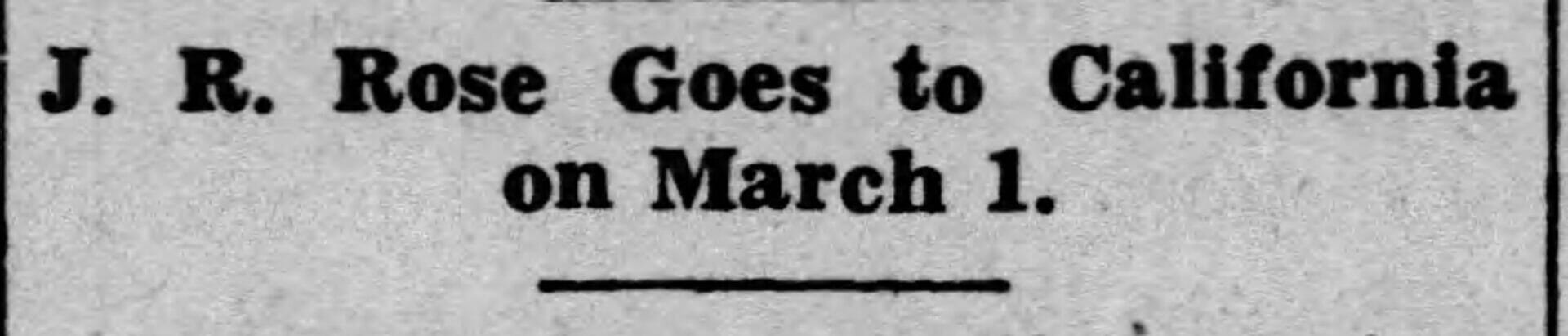
Oakland’s first Black city councilman, Joshua Rose, served on the Oakland City Council, representing District 2 from 1965 to 1977.
Joshua Rose, pictured in 1928 (University of Pittsburgh)
Early Life
Joshua Richard Rose was born in Lexington, Virginia, on September 11, 1906, to George and Mary (Charles) Rose.
His family relocated to Pittsburgh, Pennsylvania, where Joshua attended Schenley High School.
After high school, he enrolled at the University of Pittsburgh (Pitt), where he completed the required credits for a Bachelor of Science in Business Administration degree in 1934. He did post-graduate work in economics, philosophy, and psychology at New York University.
YMCA
While at Pitt, he worked at the Hill District Center Avenue YMCA. The Y served as a residence for Black students at Pitt who were not allowed to reside at the university residence halls.
The Montclair Times, June 18, 1935
After graduation, Rose accepted a position with the YMCA in Montclair, New Jersey.
The Pittsburgh Courier – February 23, 1935
Montclair Times – Feb 1939
In 1939, Rose moved to California with his wife, Virginia, and their two children, Richard and Virginia, to help establish a branch of the Oakland YMCA for the local African American community.
Oakland Tribune April 23, 1939
He helped create what was later known as the Northwest Branch, initially located at 36th and San Pablo but later moved to 3265 Market St. in the early 1940s.
Rose was responsible for introducing summer day camps that incorporated arts and crafts, sports, and outdoor activities, including an annual trip to Yosemite National Park.
Oakland Tribune, March 28, 1943
Rose worked throughout his career to provide many Oakland youth with constructive activities and summertime employment through the YMCA’s programs. In 1967, Rose retired as Associate General Secretary of the Metropolitan Branch of the YMCA.
Board of Playground Directors
SF Examiner July 18, 1947
In 1947, the city council selected Rose as the first African American member of the Board of Playground Directors, a group that would eventually become the Oakland Recreation Commission.
Oakland Tribune June 1, 1959
Rose was a board member for 17 years, including serving as chairman from 1961 to 1962.
Oakland Tribune, May 9, 1957
Oakland City Councilman
On August 27, 1964, Mayor John Houlihan asked Rose if he would complete Robert V. McKeen’s unexpired termon the Oakland City Council. Rose agreed and became the first African American to sit on the Council.
Oakland Tribune August 30, 1964
Rose represented the 2nd District. A Republican, he was re-elected three times in 1965, 1969, and 1973.
“I have a deep interest in Oakland’s future. To secure that future, dedication and sacrifice based on sound academic training and reliable experience are necessary.”
Joshua A. Rose April 1965
He was a respected member of the Council, particularly for his work in easing racial tensions in the city in the late 1960s, when the Black Panther Party, founded in Oakland in 1966, challenged the local political establishment.
After sustaining severe injuries in an automobile accident, Rose officially retired from the Council on June 30, 1977.
Death
“Josh was a symbol for us” “A symbol of success.” Mayor Lionel Wilson Septe 1987
Joshua Rose passed on April 13, 1987, from Parkinson’s disease. He was 81.
Fannie Wall Children’s Home and Day Nursery, an orphanage and daycare center in West Oakland, was established in 1918 by African-American clubwomen. Sometimes, it is called the Fanny Wall Home.
“Charity is the Golden Chain that reaches from heaven to earth.”
from the letterhead
The Beginning
In 1914, the Northern Federation of California Colored Women’s Clubs President Fanny Wall and Financial Secretary Hettie Tilghman began working on a children’s home and day nursery to support black working mothers and care for orphaned black children. After years of planning and fundraising, the home opened in 1918 on Peralta Street in West Oakland.
“Care for the Orphans
“Shelters the Half Orphans”
“Keeps the Children of Day Workers.”
Oakland Tribune April 1920
Initially, the home was called the “Northern Federation Home and Day Nursery.” Subsequently, it was renamed to honor Fannie Wall, the first woman to run the charity day-to-day.
The Fannie Wall Children’s Homeand Day Nursery was open to children of all races, ethnicities, and religions. It was the first facility in Northern California to provide various services, including housing, boarding, and daycare for black orphans.
It was located at 1215 Peralta Street in West Oakland from 1918 to 1928.
Fannie Wall ( 1860-1944) came to Oakland with her family in the early 1900s. She was born in Gallatin, Tennessee, in 1860. She was married to Archey(Archy) H Wall (18?? -1931), a staff sergeant in the US Army. They had two daughters, Lillian (Williams) and Florence (Murray), and one son, Clifton Archey, who was transferred to the Presidio in San Francisco and ultimately ended up in Oakland. Wall was an early community activist who participated in several organizations that promoted African American economic empowerment.
She served several terms as the president of the California Federation of Colored Women’s Clubs.
She co-founded the Art and Industrial Club of Oakland in 1906. Under her presidency, the club joined the Child Welfare League Wall and helped establish the “Colored Y” of Oakland.
In 1936 Archie Williams her grandson (Lillian)won a gold medal in the 400-meter run in Berlin.
Oakland Tribune August 8, 1936
Fannie Wall died on April 14, 1944, in her home on Telegraph Avenue. She is buried in the same plot as her husband in the San Francisco National Cemetery.
Oakland Tribune April 20, 1944
Linden Street Site
In 1928, having outgrown its original location, it moved to a new one on Linden Street.
Fannie Wall Children’s Home, 815 Linden – 2nd site -Courtesy The African American Museum and Library Oakland
They purchased the handsome house at 815 Linden Street for $5000. Charlie Mau designed the upper-middle-class house in the 1880s. It was one of five buildings built by Frances Reichling, a surveyor who subdivided his property at the corner of Linden Street and Eighth Street. The most prominent building became the family home; the others were rentals.
Linden Street 1948 -African American Museum & Library at Oakland (Oakland, Calif.)
The home could accommodate up to 20 children and 8-15 children for daycare services with a professional staff of more than 10 employees, including social workers and a volunteer psychiatrist.
They considered this house a step up from the one on Peralta Street, and it was across the street from the “Colored Y.”
Women and children seated around the piano at the Fannie Wall Children’s Home and Day Nursery- updated -African American Museum & Library at Oakland (Oakland, Calif.)
New Look
They gave the Linden Street site a facelift in 1953. The “new look,” a two-room addition, was used as the administrative offices, releasing the old offices and reception room for nursery classes and a future library. They provided room for 47 children.
In 1962, the Oakland Redevelopment Agency purchased 815 Linden St. and demolished the building for the Acorn Project.
Management
“Fannie Wall is Calling”
From the annual report
The Northern Federation of Colored Women’s Clubs operated the Fannie Wall Home until 1941, when it was incorporated as an independent organization. At that time, it was the only home in California that primarily cared for African-American children.
The home was admitted as an agency of the Community Chest-United Crusade in 1923
Fannie Wall was elected the first president and served for over twenty years as the head of the 21-member board of directors. She succeeded Mrs. Lydia Smith Ward, whom Mrs. Chlora Hayes Sledge followed in the 1940s.
The home was managed by a Board of Directors, primarily composed of members of the Northern Federation of Colored Women’s Clubs, a community advisory committee, and an executive director who oversaw its day-to-day operations.
The Board of Directors of the Fanny Wall Home – Chlora Hays Sledge, President, center-left.Courtesy The African American Museum and Library, Oakland
Girls with fans at the Fannie Wall Home in the 1940s.Courtesy The African American Museum and Library, Oakland
Fundraising
The home received funding from various sources, including rent from an apartment in Berkeley donated by Josephine Sutton, Community Chest, the Dreiser Trust, and fundraising events coordinated by the home.
Ticket to chicken dinner for Fannie Wall Home Benefit-1944 -African American Museum & Library at Oakland (Oakland, Calif.)
Fannie Wall Children’s Home and Day Nursery, Inc. charity ball program – 1946 – African American Museum & Library at Oakland (Oakland, Calif.)- Identifier MS162_B1_F6_001
Oakland Tribune 1958
The third charity ball was held on January 19, 1948, at the Oakland Auditorium.
In 1959, Slim Jenkins held a fashion show to raise money for the building fund. Models displayed the latest styles.
A Haven For Children
Rodeo artists Schwartz and Grodin entertain children with finger paints at the Fannie Wall Children’s Home and Day Nursery – circa 1947 -African American Museum & Library at Oakland Photograph Collection.
Oakland Tribune 1949
In 1949, the Fannie Wall home provided daycare for 30 children, ages 3 to 14, while their parents worked. During the summer, the children took swimming lessons at the De Fremery Park pool, enjoyed story hours at the West Oakland Branch Library, and had special excursions to other city parks and playgrounds.
Birthday Party 1946
Monthly parties were held to honor children whose birthdays fell that month. They would dress up for a special dinner or an afternoon party.
Oakland Tribune August 8, 1948
Integrated Playground at the Fanny Wall Home, the 1950s. Courtesy The African American Museum and Library, Oakland
The Final Location
In 1964, they purchased a house at 647 55th Street for $19,000. However, they initially struggled to obtain a license from the Social Welfare Department, and the home wasn’t reopened until 1967 as part of a placement program for the Alameda County Welfare Department.
Fannie Wall Children’s Home 55th Street – 3rd site Courtesy The African American Museum and Library Oakland
The home closed again in 1970 for remodeling and reopened in 1978 as a child daycare facility and Head Start Center. It is now called Fannie Wall Head Start.
Group photograph of attendees at Fannie Wall Children’s Home and Day Nursery mortgage burning ceremony (first row, left-right): Annie Mae Smith, Albertine Radford, Silvia Parker, Mildred McNeal, Marge Gibson (second row, left-right): Bessie Watson, Euna Tucker, N. Adams, Lela Posey (third row, left-right): Eugene P. Lasartemay, Roy Blackburn, Kermit Scott, Harold Adams – 1981 -African American Museum & Library at Oakland Photograph Collection
Fannie Wall Pre-K Program – 647 55th Street, Oakland, CA
More Info:
Under Siege: Construction and Care at the Fannie Wall Children’s Home and Day Nursery – Marta Gutman – Researchgate.net
Delilah Beasley was the first African American woman to be published regularly as a columnist for the Oakland Tribune in California.
She is most known for her book “The Negro Trail-Blazers of California,” published in 1919 and reprinted in 1968.
Early Life
Delilah Leontium Beasley was born in Cincinnati, Ohio, on September 9, 1871, just after the Civil War, to Daniel Beasley, an engineer, and Margaret Harris.
Beasley began her newspaper career in 1887, writing about church and social activities for the black newspaper, the Cleveland Gazette.
After her parents’ death, she went to Chicago and took a position to learn massage: she desired to become a nurse, which she became a few years later.
She traveled to California to nurse a former patient and stayed.
After moving to Oakland in 1910 at the age of 39, she wrote for the Oakland Sunshine and the Western Outlook.
In 1910, 3,055 African Americans lived in Oakland.
Trail-Blazers
To help her race; to open doors into the arts and sciences for the negro boys and girls, has been the impelling force for Delilah Beasley”
Los Angeles Times Jul 13, 1919
Oakland Tribune April 16, 1915
Beasley spent the first nine years in Oakland researching Black Americans’ history in the west at the University of California at Berkeley. She also would give presentations at local churches.
An early cover of the book
In 1919 she self-published a book called The Negro Trail Blazers of California. The book chronicled African American “firsts” and notable achievements in early California. The book includes diaries, biographical sketches, poetry, photographs, old papers, conversations with old pioneers, and a comprehensive history of early legislation and court cases.
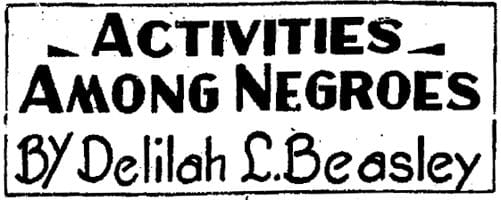
Her book paved the way for Beasley to become the first African American woman in California to write regularly for a major metropolitan newspaper. She worked for the Oakland Tribune from 1923 to 1934 and wrote a weekly column entitled “Activities Among Negroes.” The column carriedcivic and religious news of the black community
Beasley was determined to advance the rights of African Americans and women; she joined many civic clubs, including the NAACP, the Alameda County League of Women Voters, the National Association of Colored Women, the Oakland Council of Church Women, and the Linden Center Young Women’s Christian Association.
She was an honorary League of Nations Association of Northern California member.
Oakland Tribune March 3, 1928
Delilah died at the age of August 18, 1934. Beasley is buried in St. Mary’s Cemetery.
Oakland Tribune August 19, 1934
She lived for many years at 705- 34th Street.
The exterior of Delilah Beasley’s house, 705 34th Oakland, California – African American Museum & Library at Oakland
A bit of history of some of the mansions that once graced the streets of Oakland. More to come at a later date.
Burnham Mansion
Burnham Mansion was at the corner of Lakeside Drive and 17th Street. The three-story mansion was built in 1902 by John Russell Burnham.
Oakland Tribune 1955
The Burnham family selected the site on Lake Merritt’s edge because of its similarity to Lake Geneva.
The city’s first stall shower and an automobile garage were the house’s distinctive features. The Burnhams were the owners of one of the first two automobiles in Oakland.
Oakland Tribune 1955
The mansion was turned over to the American Red Cross for a hospitality center at the beginning of WWII. Alcoholics Anonymous occupied the home until 1955.
In 1956, construction was to begin on ne 60-unit apartment building. The new structure was expected to cost $2.5 million. Each of the 60 apartments ran completely through the building with views of Lake Merritt. Other features included parking on two levels, the elimination of corridors, an extensive elevator system, individual patios, and a rooftop garden.
Lake Merritt – Anthony Chabot’s Home – circa 1886 – Photo by Frank B. Rodolph – http://www.oac.cdlib.org/ark:/13030/kt9d5nd40c/?order=1
The old home of Anthony Chabot, founder of Oakland’s modern water system, was torn down in 1952. The city had declared the house a fire and health hazard. The home was located at 104 East 15th and 2nd Avenue.
Lake Merritt – Anthony Chabot’s Home – circa 1886
The building had been used as a rooming house for years, taking in enough money to pay the taxes, and was still owned by Ellen Chabot Bothin.
The home was a modest one, considering the owner was a millionaire. The house was two stories with an attic, its rooms with high ceilings, marble mantels, and velvet embossed walls.
The Chabot’s name is a part of our history, with the following named after them.
Chabot Road
Chabot Observatory
Chabot School
Lake Chabot
Goodall Mansion
Edwin Goodall built an elaborate mansion in 1880. The house was located at 1537 Jackson Street.
The home had paneled walls, a bed carved out of mahogany, and a small theater with dressing rooms.
In 1918, Dr. M.M. Enos purchased the home and operated it as the St. Anthony Hospital until 1923, when it became theJackson Lake Hospital.
Oakland Tribune 1960
In 1960, the hospital was razed to make room for an apartment building called the Jackson Lake Apartments.
Oakland Tribune Sept 23, 1960
Jackson Lake Apartments
King Mansion
Charles H. King built his mansion in about 1884.
King City, a rural community in the Salinas Valley, was named in 1886 for Oakland’s Charles H. King.
In 1971, the old and neglected King family Mansion still stood at 1029 Sixth Avenue and East 11th Street. The home at one time had 38 rooms. Not sure exactly when the home was razed.
Mein Mansion
Oakland Tribune 1964
The mansion of Capt. Thomas Mein was located at the corner of Jackson and 15th Street.
Oakland Tribune 1964
The three-story, 16-room Victorian was built in 1899 and included a winding staircase and marble fireplaces.
Oakland Tribune 1964
In 1964 home was razed to make room for a new 34-unit apartment called the Delphian.
Oakland Tribune 1965
Palm Knoll
Oakland TribuneJan 12, 1947
Palm Knoll, was the home of Governor (later Senator) George C. Perkins (1839–1923). The 24-room mansion, Vernon and Perkins Street, was built in 1890.
Palm Knoll was razed in 1947 to make room for apartments.
How it looked before it was demolished Oakland Tribune Jan 12, 1947
Playter Home
Ely Welding Playter, a successful hardware merchant in San Francisco, built the mansion in 1879 at 14th and Castro Streets. The area was the center of Oakland’s elite. He lived there with his family until 1885.
YWCA (old Player Home) at 14th and Castro Streets in Oakland, California. Oakland Public Library, Oakland History Room. Undated
It was a three-story structure with long, narrow windows.
Playter was the 24th Mayor of Oakland. He served two terms, 1885 and 1886, and was a Republican.
In 1907, the YWCA raised enough money to purchase the home to be used as the association’s headquarters and a home for “working girls.”
Oakland Tribune Feb 18, 1907
The house was torn down in 1948 to make room for a service station.
The hospital was Once a Mansion.
The original home of the Solomon Ellsworth Alden family, then the John Edgar McElrath family.
The Acorn or Acorn Projects are a series of housing projects in the Acorn Redevelopment Project Area of West Oakland.
They were original three housing units, Acorn 1, Acorn 2, and Acorn 3.
Acorn Housing Project model, April 7, 1966. – The Acorn Housing Project promised sleek, modern architecture — concrete-block units with sharp angles and crisp white exteriors
The project started in 1962. The first housing unit contained 479 units and cost $9 million; it was completed in 1969. A second 98-unit called Acorn II was completed in 1971 at the cost of $3.7 million.
Oakland Tribune 1959
Slum Clearance Project
“Oakland’s first slum clearance undertaking will be called The Acorn Project.”
Oakland Tribune March 9, 1959
The Oakland Redevelopment Agency selected the name Acorn for the project area (about 45 Blocks) flanking the Nimitz Freeway between Union and Brush Streets.
Agency member Carl O. Olsen said the“Acorn is symbolical for the future and growth.”
Oakland Tribune February 24, 1965
Acorn’s Amazing Progress
It was reported that Project Acorn was shaping up as one of the most successful blight clearance projects in the nations’ history in 1964.
In 20 months, they had accomplished the following:
Purchased 90% of parcels
Relocated 83% of families
Demolished 75% of structures
Sold four lots for new plants
Oakland Tribune
Property Owners Sue
Thirteen West Oakland property owners sued to block the Acorn Project. They sued the Federal Redevelopment Agency and the City of Oakland, claiming that the Acorn Project “would deprive Negroes of their properties.”
They said the slum elimination project would, in effect, deprive them of homeownership because they have limited access to other residential areas. They told the court they have no objection to urban improvement, but object to being evicted from their homes without a place to go,
The U.S. Court of Appeals in San Francisco ruled against them in May of 1963.
Acorn: Acres of Vacancy
In the land cleared for the project, there were rats, ants, and sparrows lived. But no people.
Oakland Tribune 1967
The Oakland Redevelopment Agency had spent $ 13 million by 1967. But still no housing.
It was described as a slum clearance project, and it was a success. Some 4,300 people lost their homes as wrecking crews smashed aging buildings.
Acorn SIte 1966 By the time this picture was taken, 90 percent of the Acorn project-area had been “cleared,” and 86 percent of residents had relocated — many to the neighborhood of East Oakland and the northern East Bay city of Richmond.*
It took from April 1962 to May 1965 to reduce all but 610 old structures to splinters. In their place was acre upon acre of empty fields in the area between 10th and First and Brush and Union Streets.
Thirty-two were set aside for industrial redevelopment, thirty-four acres for new, moderate-priced housing.
Since 1962 when the Acorns were approved, 12,000 rental units were built in other parts of Oakland.
Acorn Project Aims to Attract Whites
The Acorns, a middle-income development featuring sophisticated townhouses and apartments, was one of the nations’ first attempts at “reverse integration.”
To attract whites to the project, the Building Trades Council tried to put the finest housing it can afford into the project and charge the lowest rents possible.
Rents ranged from studios at $67 up to four-bedroom two-story townhouses at $145. (The upper limit on income was $11,225)
Remember Acorn? It’s Dedicated
After sitting empty for ten years, the Acorn Project was finally dedicated in 1967.
Groundbreaking ceremony for Acorn construction, November 10, 1967 –John B. Williams (kneeling) holds a sign for the Acorn Urban Renewal Project as it is hammered into the ground by Robert C. Weaver, Secretary of the newly founded Department of Housing and Urban Development.
Construction did not begin in Acorn until five years after demolition was completed, leaving a giant barren area in the middle of West Oakland, about 50 blocks, including parts of the historic heart of black Oakland, 7th Street. By the mid 60s, the demolition policies of the Oakland Redevelopment Agency (ORA) would create deep scars in the black neighborhoods close to downtown.
Ready for the Public
The first units of Oakland’s $8 million modern apartment complex opened for inspection in September 1968.
Source: San Francisco Examiner 9/16/68 “Oakland’s Redevelopment Project Ready for Public” (available at Oakland History Room)
Studio – $67.00 a month
4-bedrooms – $145.00 a month
By December of 1968, 106 families lived in the Acorns.
SF Examiner Sept 1968
Award for Acorn
Architects Edmund Burger and Patricia Coplans won the 1970 Holiday Award for the design of the Acorn Projects.
The Acorns Today
SF Examiner May 1998
The property underwent extensive redevelopment in the 1990s due to four years of collaboration among HUD, The City of Oakland, BRIDGE, the Acorn Residents Council, and the West Oakland community.
SF Examiner May 1998
Like many other projects, Acorn was known as a dangerous place for residents and nearby neighbors. The new Acorn will have several safety features. Density was reduced by half from the 700 units that made up the old project, and a series of courtyards with locked gates to limit access.
https://www.jerocorp.com/acorn-housing
Acorn 1 was demolished, and a small community of two-story single-family houses between Filbert and Market Streets was built in its place.
Acorn 2 and Acorn 3 were renamed “Town Center Apartments at Acorn” and “Courtyard Apartments.
Acorn Town Center and Courtyards consist of 293 affordable studio, one-, two-, three-, and four-bedroom apartments.
In the 1930s, the Linden Branch YWCA and the Filbert Street YMCA developed programs that helped the Black community survive the Great Depression. They emerged at a time when the national Y’s both encouraged separate branches for Black members.
Linden branch of the YWCA in Oakland, California. Circa 1940 West Oakland Public Library, Oakland History Room.
Linden Center is named for its location at 828 Linden Street in West Oakland. Due to its increasing membership, it achieved “branch” status in 1924 and was then known as the Linden Branch Y.W.C.A or the Linden Y.
Young Women’s Christian Association Collection – African American Museum & Library at Oakland (Oakland, Calif.)
The Linden Y functioned as a job placement center and welfare agency during the Depression.
Linden Street Y.W.C.A.–West Oakland Library
The branch operated as a community center, offering members religious training, recreational activities, counseling, vocational training, and music and art programs.
Linden Street YWCA – African American Museum & Library at Oakland
YWCA yearbook Young Women’s Christian Association of the U.S.A.–History. African American Museum & Library at Oakland (Oakland, Calif.)
By 1938, the Linden St. Y had a membership of over 750.
For almost 25 years, the Linden Branch was a segregated facility. In 1944, following a national policy change, the Oakland YWCA board integrated the Linden Street Y.
“to make its program available to all women and girls irrespective of race, creed or color”
The name was changed to West Oakland CenterYWCA.
A group of men and women sitting on a wall in front of Linden Branch Y.W.C.A – circa the 1930s. African American Museum & Library at Oakland (Oakland, Calif.)
Group Photo 1940 African American Museum and Library at Oakland
Linden Street was described as ” a two-story framed building with four club rooms, a reception hall, office for the business and industrial sections, and two rooms rented to accommodate working girls.”
The facility and the surrounding neighborhood were razed in the early 1960s to make room for the Acorn Projects.
Linden Street Y.W.C.A. 828 Linden Street circa 1940 Young Women’s Christian Association of Oakland. African American Museum & Library at Oakland (Oakland, Calif.)
Oakland’s Black YMCA.
The organization, organized by Rev. L.A. Brown of the First A.M.E. Church, opened on June 6, 1926. It was initially located at 3431 Market Street in West Oakland, and William E. Watkins, an attorney, was the first director. In 1927, the organization had 160 members, including 134 seniors and 26 boys.
3431 Market St -Today, Google Maps
In 1929, they relocated to the Filbert Street Branch YMCA at 804 Filbert Street. In 1935, they moved to 805 Linden Street and became the Eight and Linden Branch of the YMCA.
The Filbert Street Y promoted a competitive sports program. Its annual track-and-field meet attracted competitors from across the Bay Area.
Oakland Tribune, March 19, 1934
They sponsored a variety of classes and activities. Members could attend Bible and woodworking courses. C. E. Brown organized a boys’ orchestra that performed for the public. Some of the boys were invited to summer camp.
In 1936, Mr. Watkins resigned as director and was replaced by R.T. Smith. The directory lists the BLACK YMCA at 836-36th Street. After moving to 36th Street, it became known as the North Oakland Branch. It was likely integrated around the same time as the Linden Branch.
Exterior of YMCA building African Americans–California–Oakland–History–Pictorial works. source: Joseph (E. F.) Photograph Collection circa the 1930s
836 -36th Street today – Google Maps
More Info:
Oakland Heritage Alliance Newsletter – The Black Y’s of Oakland – Winter 1987-88